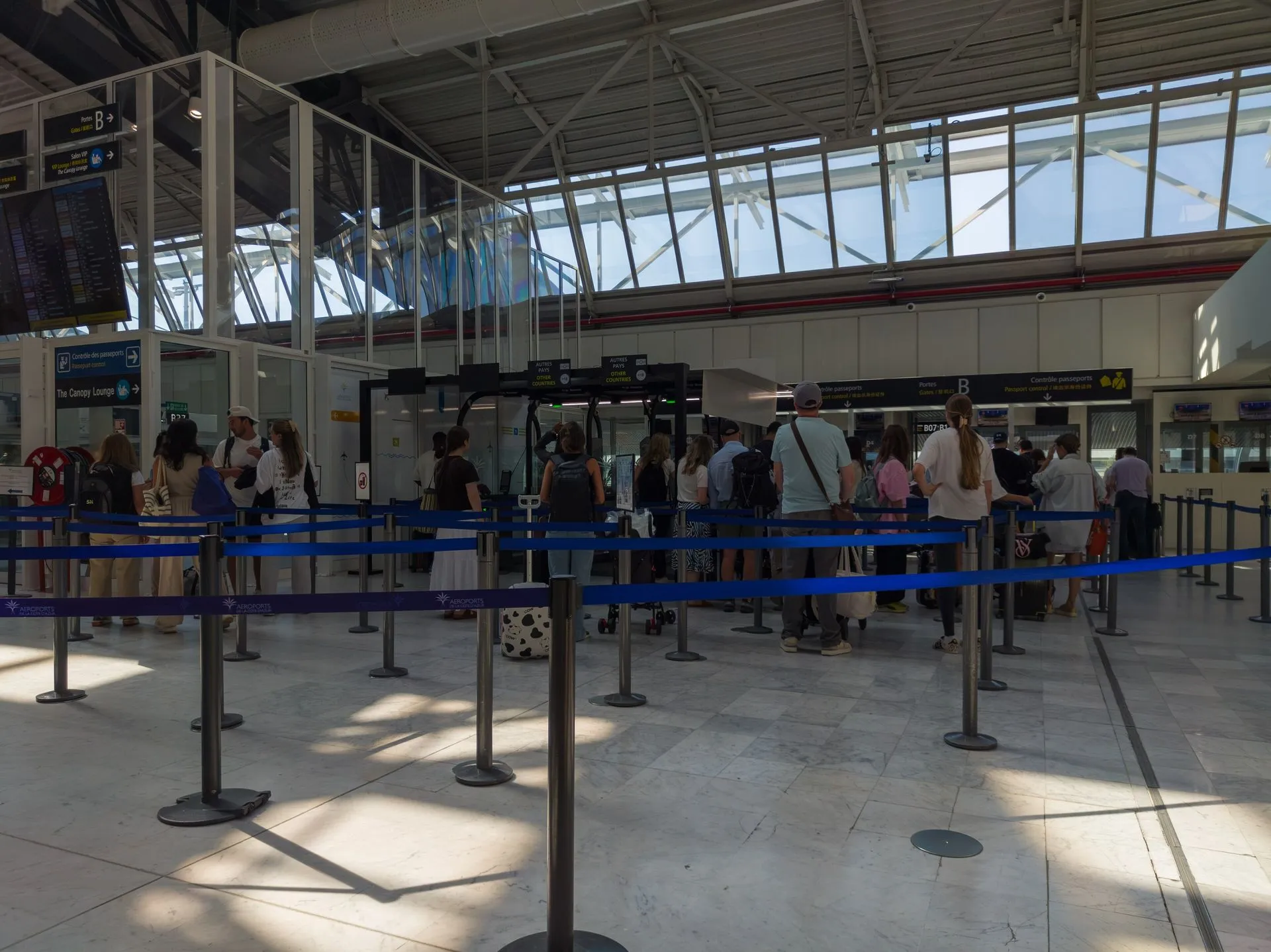
ETIAS application: what travel agencies should tell clients
ETIAS applications are not open yet. What agencies should tell clients now, how filing on a client’s behalf works, the EUR 20 fee and the scams to avoid.

Short answer: ETIAS applications are not open yet — as of 17 October 2026 the EU’s official ETIAS site says no applications are collected and the start date will be announced several months ahead. When they open, visa-exempt travelers (US, UK, Canada, Japan and 55 more countries and territories) will apply online and pay EUR 20, or a travel agency will file on their behalf with a signed declaration of representation. Most applications are processed within minutes, and one authorization covers three years of trips or until the passport expires, whichever comes first.
The EU’s Entry/Exit System has been registering travelers at the border since April 2026 (our EES guide covers that), and ETIAS is the second half of the same reform: an application travelers complete at home, before the trip. Agencies will get the questions, and some clients will already have paid a lookalike site by the time they ask. This guide covers what an ETIAS application will involve, what your agency may do on a client’s behalf, and what to tell clients today, when the honest answer is “not yet.”
Can clients apply for ETIAS today?
No. The official ETIAS website carried this notice on every page when we checked it on 17 October 2026: ETIAS is currently not in operation and no applications for travel authorisations are collected at this point. The EU says it will announce the specific start date several months before launch.
An earlier official announcement (July 2025, when the fee was set) said visa-exempt travelers would be required to apply “starting from the last quarter of 2026,” but no start date had been announced as of our check. Do not quote a date to clients from an article, an old newsletter or memory: check the official ETIAS page the day you send the trip, and write the date of that check in your note. Our EES post applies the same rule to border registration.
The gap between “system coming” and “applications open” is where clients get hurt. The EU’s own agency-facing article warns there are many unofficial ETIAS websites, some falsely claiming to accept applications or charging higher fees. A client who Googles “etias application” today can pay a reseller for a submission that no system exists to receive. Until the EU announces the start date, the only correct advice is: wait, and use only the official site or app, europa.eu/etias.
What is an ETIAS application, in one paragraph you can send to a client?
ETIAS is the European travel authorization for nationals of the 59 visa-exempt countries and territories (including the US, UK, Canada and Japan) who visit any of 30 European countries for short stays. The application is filled in online, on the official website or app, for EUR 20. A passport and a payment card are all you need at hand. The form asks about identity, travel document, occupation, travel plans and any criminal convictions, and most applications are approved in minutes. Once granted, the authorization is linked to that passport, allows stays of up to 90 days in any 180-day period, and stays valid for three years or until the passport expires, whichever comes first. It is not a visa, and it does not allow work or long-term study.
| ETIAS application, at a glance (checked 17 October 2026) | |
|---|---|
| Status | Not in operation; start date to be announced several months ahead |
| Who files | Visa-exempt nationals of 59 countries and territories; agencies may file on a client’s behalf |
| Where | Official site europa.eu/etias or the official app only |
| Fee | EUR 20; free for under-18s, over-70s, qualifying family members of EU nationals |
| Decision | Most in minutes; at latest 4 days, plus 14 or 30 days in exceptional cases |
| Valid for | Three years, or until the passport expires; multiple entries, 90 days per 180 |
Clients on a Schengen visa do not need ETIAS, and holders of a residence card or residence permit issued by a country that requires ETIAS are generally exempt too. The EU’s who-should-apply page keeps the current list of both groups; link it rather than copying it into client messages.
What will the ETIAS application ask for?
The official list of questions covers: identity (name, date and place of birth, nationality, home address, parents’ first names, email, phone), travel document details, education and current occupation, the intended travel and stay, any criminal convictions, past travel to war or conflict zones, and any recent decision requiring the applicant to leave a country. The applicant must declare the data is correct and confirm they understand the entry conditions.
Have ready, per traveler:
- The passport they will travel on: it must not expire within three months and must have been issued within the previous ten years. Check both dates with the passport validity checker before your client counts on it.
- A payment card for the EUR 20 fee — a variety of online payment options will be accepted.
- Answers about convictions and conflict-zone travel, which some clients will want to discuss privately before entering into a form their agent submits.
The application form will be available in the 24 official EU languages plus Icelandic and Norwegian, with how-to guides in more languages, including Arabic, Japanese and Korean. One rule agencies miss: applications for travelers under 18 must be submitted by a person exercising parental authority or legal guardianship, so a school trip or a family booking needs the right adult’s name on each child’s application.
Can a travel agency apply for ETIAS on behalf of a client?
Yes — the EU’s applying-on-behalf page allows “a friend, a family member or a commercial intermediary such as a travel agency” to submit the application, and its agency-facing article confirms travel agents may do so for clients. The mechanics:
- You and the client sign a declaration of representation, authorizing you to compile and submit the application. The ETIAS website will provide a sample form.
- One declaration per traveler. The EU’s example: a family of two parents, two children and one person under legal guardianship requires five separate declarations. Group applications are not accepted — every traveler, including children, files their own application.
- You submit through the official website or app, entering your own details as the submitter plus the client’s answers.
- Use the client’s personal email address, not the agency inbox: that address carries all official communication about the application for its entire validity. If the client cannot access it, they lose decisions, revocations and renewal reminders.
- Show the client the draft before you submit it: the traveler remains personally responsible for the data, and a wrong passport number means refused boarding.
- The official fee is EUR 20; you may charge a service fee on top, which the EU says should be reasonable. Excessive charges or non-submission can be reported anonymously to the EU.
That sixth point cuts both ways: it legitimizes a fair agency service fee, and it gives you the counter-script for clients who arrive with a €70 “ETIAS agency fee” receipt from a lookalike site.
When should clients apply, and how long does it take?
The EU’s advice, in its FAQ, is unambiguous: obtain the ETIAS travel authorization before you buy your tickets and book your hotels. Build that line into every Europe itinerary you sell. The decision timeline:
| Step | What the EU says |
|---|---|
| Standard decision | Most applications processed within minutes; any remaining decision within 4 days (96 hours) |
| More information or documents requested | Up to 14 additional days |
| Interview with national authorities | Up to 30 additional days |
So “apply the day before the flight” is a real risk, and “apply before booking” is the official recommendation, not caution for its own sake. Once ETIAS goes live, airlines, cruise lines and other carriers will verify the authorization before boarding, the same way they check passports today.
Two follow-ups worth putting in the trip file: the EU emails the traveler before expiry, and a new application can be filed from 120 days before the current authorization expires. And remind frequent travelers that the 90-day count still applies — they can plan it with the 90/180-day rule calculator.
How much does an ETIAS application cost?
EUR 20 per application, on the official site or app. The fee was originally set at EUR 7; in July 2025 the European Commission put forward the increase to EUR 20, citing inflation since the original fee was set and the system’s added functionality, and noting it brings the fee in line with the UK ETA and the US ESTA.
Three fee facts clients get wrong:
- Under-18s and over-70s do not pay, nor do qualifying family members of EU nationals. A family of two adults and two teenagers pays two fees, not four.
- The fee is per application, not per trip. One EUR 20 authorization covers three years of travel (or until the passport expires), entries as often as the traveler likes, subject to the 90/180 stay limit.
- No one can “expedite” the official fee. There is no paid fast lane on the government system; sites selling faster processing are selling nothing.
Why would an ETIAS application be refused, or a client turned away?
The most common failure will be mundane: data that does not match. The EU is explicit that a traveler is refused boarding and refused entry if the passport data differs from what the authorization holds, and that they must carry the same document used in the application. A client who renews their passport after a trip is booked needs a new ETIAS, not an amendment.
Passport validity is the second trap: the document must be valid for at least three months after the intended departure from the European countries requiring ETIAS and issued within the previous ten years. Both dates are checkable with the passport validity checker, and the deeper background is in our passport validity rules post.
Genuine refusals — risk-related reasons, or an application with false statements — arrive by email with the reasons and instructions for appeal, and a refused applicant can apply again after correcting the problem. A granted authorization can also be revoked or annulled (for example, if the travel document was lost and reissued); the traveler is notified by email. None of that is your agency’s call to predict: your job is accurate data and an official link, not promises.
What should your agency do before ETIAS applications open?
- Collect passport data per traveler at booking — nationality, passport number, issue and expiry dates — not just the lead booker’s. ETIAS eligibility and the passport rules are individual, and the passport validity checker catches the three-months and ten-years failures before they ruin a trip.
- Flag visa-exempt nationalities. US, UK, Canadian, Japanese and 55 more passports will need the authorization; clients on valid visas will not.
- Put the official link, and only it, in every Europe trip: europa.eu/etias. One line — “applications are not open yet; when they are, use only this site; no agency can submit today” — protects clients from the lookalikes now.
- Never quote a start date from memory. Check the official page on the day you write the trip, and date the note.
- Draft the client message once (the paragraph above works), and drop it into every Europe itinerary as a dated “Before you go” note.
- Decide your service-fee stance now: what you will charge to file on a client’s behalf, and the declaration-of-representation workflow you will use, so the launch week is administration, not improvisation.
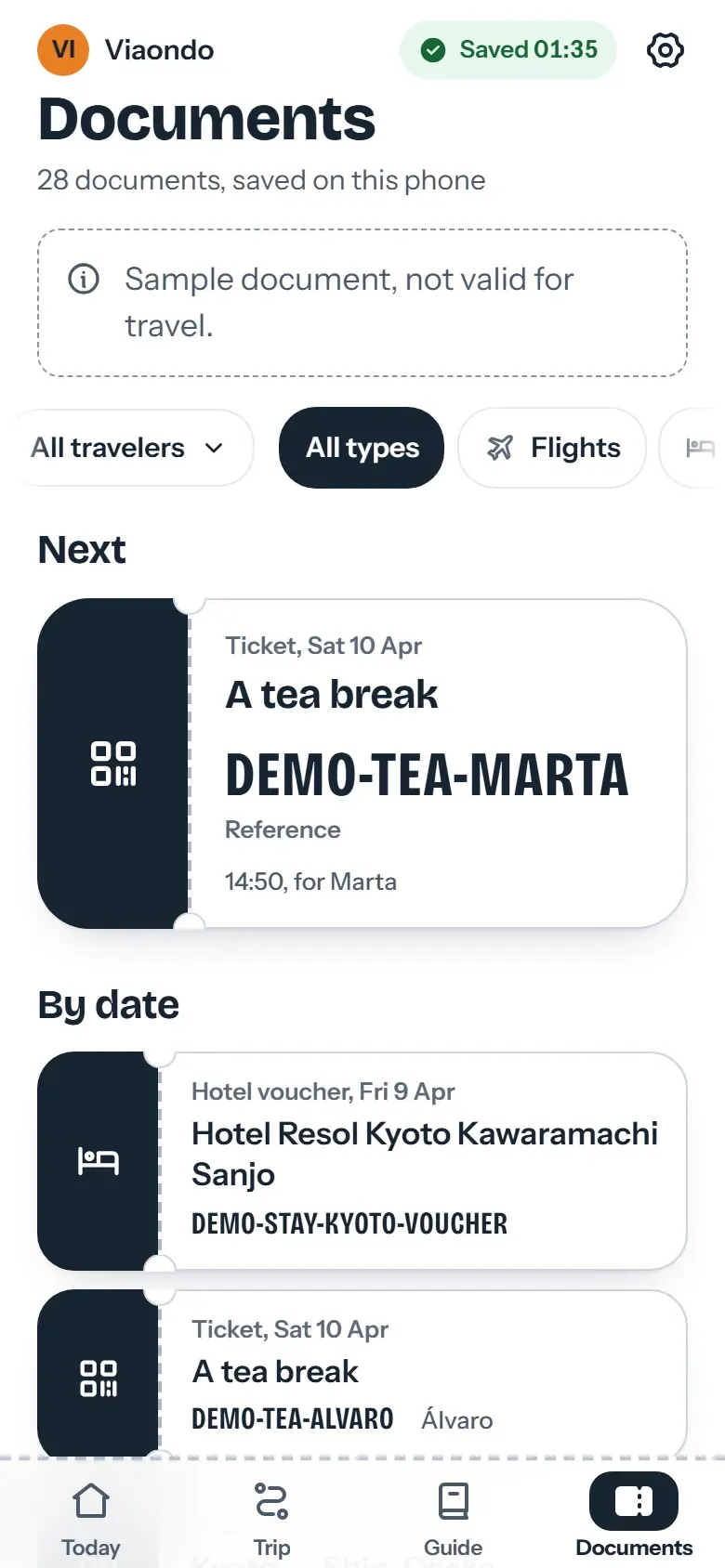
This is where an itinerary builder earns its keep: the note is written once, shows the latest version on every trip, and reaches the client in the traveler app — an offline trip app keeps the official links and your dated advice on the phone even with no signal at check-in. If you want to see how that looks end to end, open the demo trip, or start the 14-day trial.
How this guide was checked. Every claim links to an official EU page (the ETIAS site’s status banner, FAQ, application pages and its news corner), last checked on 17 October 2026. ETIAS procedures can change until launch day; re-verify against the official pages before you repeat a detail to a client. This is practical guidance for agencies, not legal advice.
Sources
- Travel to Europe (EU): ETIAS homepage — status banner (accessed 17 October 2026)
- Travel to Europe (EU): ETIAS FAQs (accessed 17 October 2026)
- Travel to Europe (EU): What is ETIAS? (accessed 17 October 2026)
- Travel to Europe (EU): Who should apply (accessed 17 October 2026)
- Travel to Europe (EU): What you need to apply (accessed 17 October 2026)
- Travel to Europe (EU): Applying on behalf of others (accessed 17 October 2026)
- Travel to Europe (EU), News corner: 5 things travel agents should know about ETIAS (5 July 2026) (accessed 17 October 2026)
- Travel to Europe (EU), News corner: ETIAS will cost EUR 20 (20 July 2025) (accessed 17 October 2026)