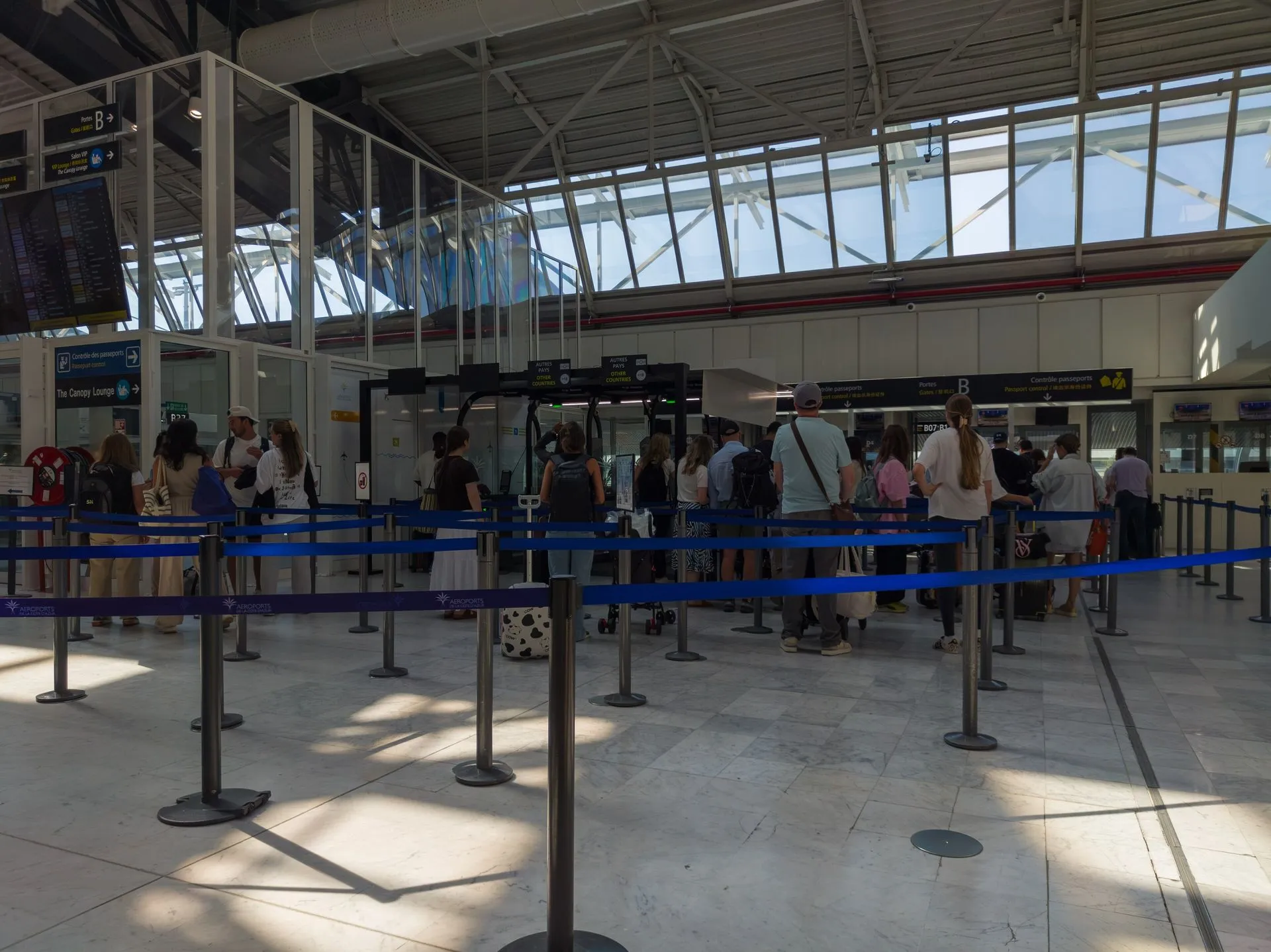
EU Entry/Exit System (EES): what travel agencies should tell clients before they fly
The EU Entry/Exit System has been fully live since 10 April 2026. What travel agencies should tell non-EU clients, who is exempt and what to add to each trip.

Short answer: since 10 April 2026, the EU Entry/Exit System (EES) registers non-EU travelers on short stays at every external Schengen border, recording passport data, fingerprints and a facial image. EU, EEA and Swiss nationals and some other groups are not registered. The 90/180-day rule is unchanged, pre-registration is optional, and ETIAS is not yet in operation.
The EES started operating on 12 October 2025 with a progressive roll-out in 29 European countries, and the European Commission says it became fully operational on 10 April 2026. If your agency sells trips to Europe for clients who are not EU citizens, you will get questions about it. This guide covers what to tell clients, what to leave to official sources and how to put it in the trip once, so you do not repeat it by message for every booking.
What is the EES, in one paragraph you can send to a client?
The EU Entry/Exit System (EES) is the automated border system that registers non-EU nationals on short stays each time they cross an external border of the 29 European countries using it. The European Commission says it has been fully operational since 10 April 2026 and reported on 27 July 2026 over 145 million entries and exits since launch. It records travel document data, fingerprints, a facial image and each entry and exit.
A message you can adapt: “Since April 2026, travelers who are not EU, EEA or Swiss nationals are registered when they enter the Schengen area for a short stay: passport details, fingerprints and a photo of the face. Allow a little extra time at the border, keep your passport at hand and follow the officers’ instructions.”
This is a summary of the official explanation, not legal advice. Link to the official pages instead of paraphrasing details that can change.
Which clients are registered and which are exempt?
The EES registers non-EU nationals on short stays, with or without a visa. According to the European Commission, nationals of EU countries, Iceland, Liechtenstein, Norway and Switzerland are not registered, nor are holders of a long-stay visa or residence permit issued by a country operating the EES. Holders of permits issued by Cyprus or Ireland are still registered.
The Commission’s exemptions notice also lists nationals of Andorra, Monaco and San Marino and holders of a Vatican City State or Holy See passport, and non-EU family members of EU, EEA or Swiss citizens who hold a residence card or residence permit, whether or not they travel with that family member. The full official list is on the EU’s To whom does the EES not apply? page. It also names non-EU nationals traveling for studies, pupil exchange schemes or educational projects; if you run school or group trips, check that entry against each pupil’s documents instead of assuming the whole group is covered.
For your agency, this turns into a question for the booking form: which passport does each traveler hold, and do they have a visa or residence permit for a European country? Ask for each traveler, not for the lead booker only. If you receive travelers from abroad as a DMC or receptive agency, ask the partner agency for these details before arrival.
The 90/180-day rule does not change
A short stay is still up to 90 days within any 180-day period, counted as one period for all 29 countries using the EES, according to the EU’s What is the EES? page. What changes is where the count comes from: recorded entries and exits instead of stamps. The same page notes that Cyprus and Ireland, which do not use the EES, still stamp passports manually.
Two practical points for clients who travel often:
- The EU’s “check how long you can stay” tool asks for the travel document and the intended dates, and answers “OK” or “not OK” with the days remaining. Send it to clients who spend a lot of time in Europe.
- The same page says the remaining-stay figure does not reflect any time in the Schengen area that began before 10 April 2026. For clients with long recent stays, count those days yourself.
You can do that count with our free Schengen 90/180 calculator, and check the date side of the passport with the passport validity checker. Both are aids for planning, not a replacement for the border officers’ decision.
Pre-registration is optional and only works at some borders
Clients can prepare, but it is optional, and today it only helps at a few borders. The EU’s Travel to Europe app is for non-EU travelers who must be registered in the EES and hold a biometric passport. They can pre-register their passport data and a facial image, and answer the entry questionnaire, within 72 hours before entering or leaving a country that supports the app. As of 10 October 2026 the EU’s app page listed only Sweden (passport data, facial image and questionnaire) and Portugal (questionnaire only); other EES countries may add it later. The app does not replace border checks. Check the app page for the client’s entry country before you mention it, and tell clients to follow the officers’ instructions either way.
Cases agencies ask about
These come up with real bookings. Each line is what the official source says as of 10 October 2026.
- Children under 12. The EU’s EES FAQ says their fingerprints are currently not scanned, even if they are subject to the EES.
- Refusing fingerprints or a photo. A traveler who refuses to give biometric data will be denied entry, according to the EU’s page on data held by the EES.
- Leaving the UK by Dover, Eurotunnel or Eurostar. The UK government’s EES guidance says EES checks at these ports are completed at the border before you leave the UK, so the wait happens at the terminal in the UK.
- Connecting flights. Passengers on a flight from outside the Schengen area who connect to a flight inside it are checked on entry at the airport where the first flight lands, under the Schengen Borders Code (Annex VI, point 2.1.2). That is where they are registered.
An example, to show how this plays out: a US couple flying Chicago–Frankfurt–Rome go through the border check in Frankfurt, not in Rome. On their first trip since the EES started, that check includes registration, so a 50-minute connection in Frankfurt is risky.
What is ETIAS, and when does it start?
ETIAS is a separate travel authorization for visa-exempt travelers, not a border record like the EES, so clients who travel on a Schengen visa will not need it. As of 10 October 2026, the EU’s official ETIAS page says it is not yet in operation, no applications are collected and the start date will be announced several months before launch. Once issued, it is valid for three years or until the passport expires, whichever comes first — for what the application will ask, what it costs and how your agency may file it on a client’s behalf, see our ETIAS application guide.
| EES (Entry/Exit System) | ETIAS | |
|---|---|---|
| What it is | Registration of each entry and exit at the border | Travel authorization obtained before the trip |
| Who it applies to | Non-EU nationals on short stays, with or without a visa | Visa-exempt non-EU nationals |
| Countries | 29 European countries using the EES | 30 European countries |
| Status on 10 October 2026 | Fully operational since 10 April 2026 | Not in operation; no applications collected; start date to be announced several months ahead |
| What the client does beforehand | Nothing required; optional app for Sweden and Portugal | Nothing yet; once live, apply online (EUR 20, some travelers exempt from the fee) |
| How long it lasts | Entry and exit records are kept for three years | Valid for three years or until the passport expires, whichever comes first |
Earlier announcements gave a target date, so clients may have heard one. Do not repeat a date from memory or from an old article: check the official ETIAS page on the day you send the trip, and write the date of that check in your note.
What should your agency do for every trip to Europe? (EES checklist)
An EES-ready trip file records, for each traveler, nationality, any long-stay visa or residence permit and passport expiry, because exemptions depend on the individual, not the booking. The steps:
- Ask every traveler, not only the lead booker, for their nationality and any long-stay visa or residence permit, and which country issued it.
- Check exemptions on the EU’s official To whom does the EES not apply? list and write down the date of the check.
- Check the passport dates with the passport validity checker. Then add a task to the trip’s “Before you go” checklist, such as “Check your passport is valid for at least three months after you leave Europe”, due 30 days before departure. Travelers tick it off in the app.
- For frequent visitors, count recent days with the Schengen 90/180 calculator, and send them the EU’s stay checker for the official figure. The EU’s checker ignores stays that began before 10 April 2026.
- Mention the Travel to Europe app only if the client enters through a country that supports it (Sweden and Portugal as of 10 October 2026).
- Leave a margin on arrival days. Work out the local landing time with the arrival time calculator and do not book a tight connection or a pick-up for the minute they land: registration records fingerprints and a facial image.
- Add one dated “Border and entry” note to the trip in your itinerary builder, with the two-sentence client message from the first section, the links to the EU’s official EES pages and the ETIAS status on the day you checked. Then send the trip once, as a link: in Viaondo each client gets the traveler app through a private link, and as an offline trip app it keeps the note and the documents on the phone at the border queue, even with no signal.
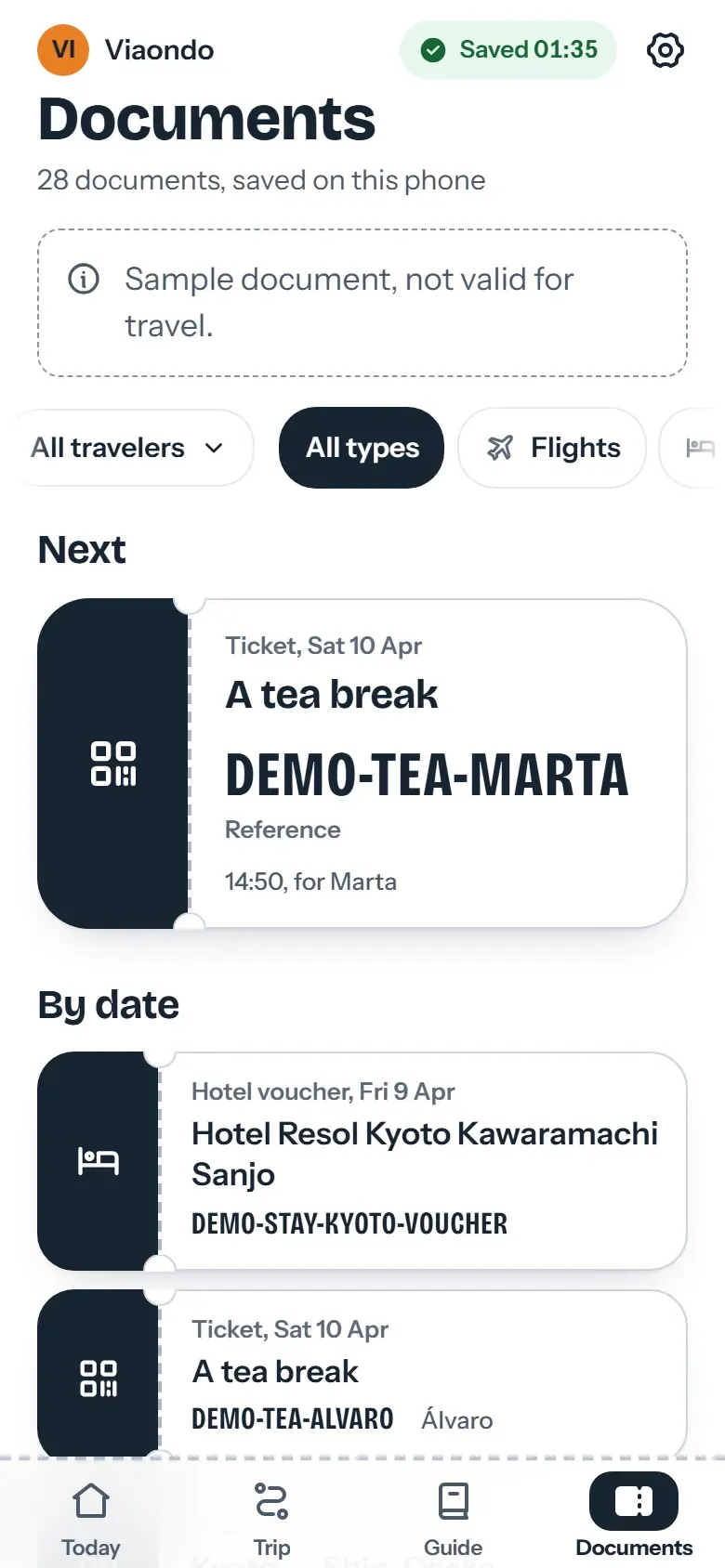
If you still send itineraries as a PDF, any change to these notes means resending the file. A trip link always shows the latest version.
What should an agency not promise clients about the EES?
Agencies should not promise EES exemptions, short queues or an official day count. The European Commission publishes who is exempt, and the EU’s Travel to Europe site runs the official stay checker, which answers “OK” or “not OK” and shows the days remaining. Link clients to those pages and date each check.
- Do not promise clients that they will be exempt or that queues will be short. Neither depends on you.
- Do not present your own count of days as an official one. Use it for planning and point clients to the EU’s tool for the official figure.
- Do not copy the details of exemptions from this post. Link to the EU’s official To whom does the EES not apply? page, which carries the full, current list.
How this guide was checked. Every claim links to an official page (European Commission, the EU’s Travel to Europe site, GOV.UK and EUR-Lex), last checked on 10 October 2026. This is practical guidance for agencies, not legal advice.
To count a client’s days before you quote a trip, use the Schengen 90/180 calculator. To see how a trip, its notes and its documents look on the traveler’s phone, open the demo trip.
Sources
- European Commission: Entry/Exit System fully operational since 10 April 2026, and who is exempt (27 July 2026) (accessed 10 October 2026)
- Travel to Europe (EU): to whom does the EES not apply? (accessed 10 October 2026)
- Travel to Europe (EU): the Travel to Europe mobile app (accessed 10 October 2026)
- Travel to Europe (EU): what is ETIAS? (accessed 10 October 2026)
- Travel to Europe (EU): what is the EES? (accessed 10 October 2026)
- Travel to Europe (EU): check how long you can stay (accessed 10 October 2026)
- Travel to Europe (EU): FAQs about the EES (accessed 10 October 2026)
- Travel to Europe (EU): data held by the EES (accessed 10 October 2026)
- European Commission: the EES will become fully operational on 10 April 2026 (30 March 2026) (accessed 10 October 2026)
- GOV.UK: EU Entry/Exit System (accessed 10 October 2026)
- EUR-Lex: Schengen Borders Code, Regulation (EU) 2016/399, Annex VI (accessed 10 October 2026)